





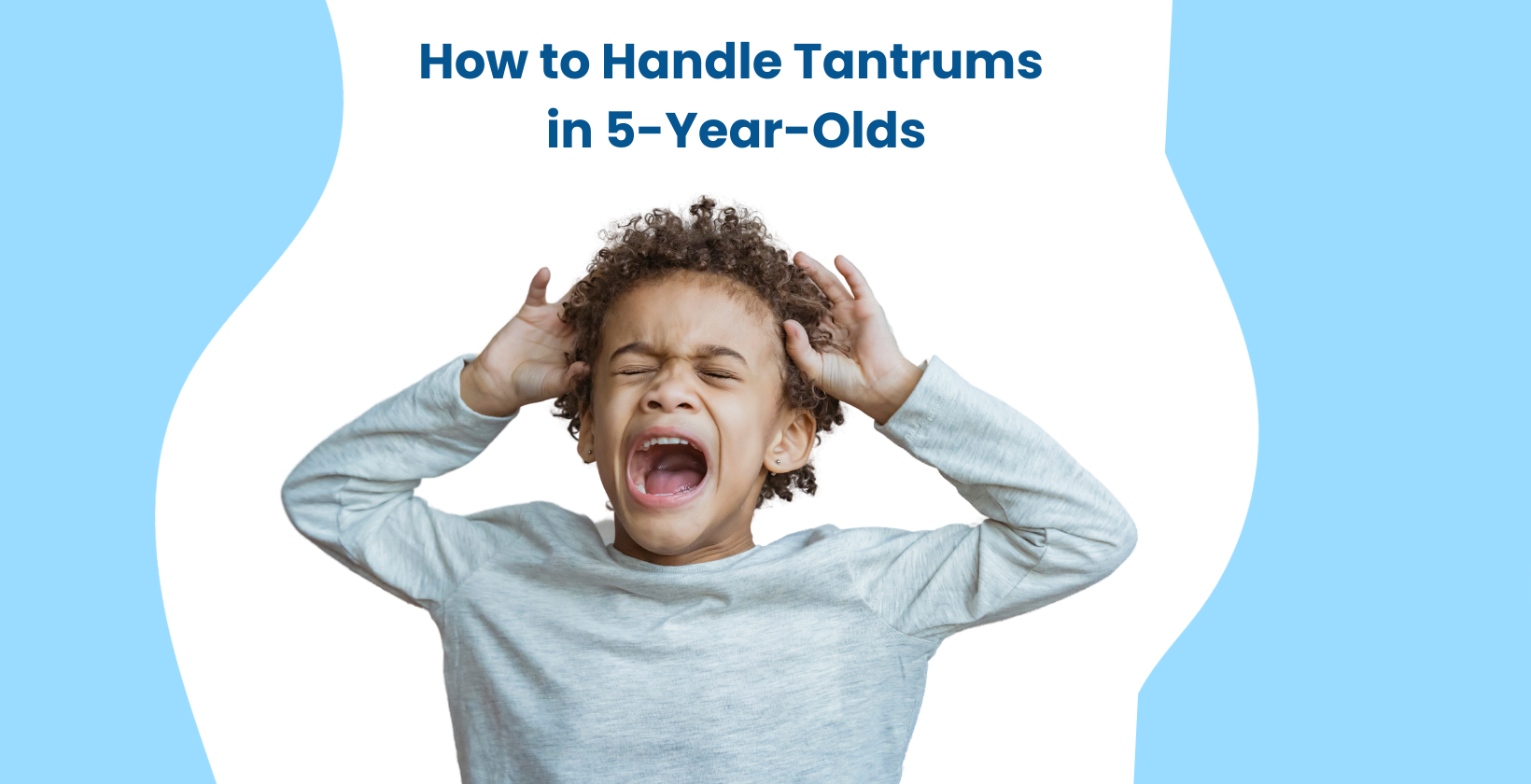
Wondering how to handle 5-year-old tantrums? These emotional outbursts can catch parents off guard — just when you think your child is growing out of the toddler phase, the meltdowns return. But here’s the truth: occasional child tantrums at this age are still a normal part of development. While most kids start gaining better control by age 4, some still struggle with managing big feelings. Understanding why these tantrums happen and what they mean is the first step. It’s not always bad behavior — it’s often a sign that your 5-year-old is still learning emotional regulation.
Are Tantrums Normal at Age 5?
Yes, tantrums in 5 year olds can still be normal. While many kids outgrow them by age 4, others need more time to build emotional regulation skills. A 5-year-old may still cry, yell, or act out when they’re tired, hungry, or frustrated. Starting school or dealing with big changes can also trigger child tantrums. As long as the outbursts aren’t extreme or constant, it’s usually just a sign they’re still learning how to manage feelings.
That’s why it’s important to learn how to handle 5-year-old tantrums with patience and awareness as they continue growing emotionally.
Understanding why these tantrums happen and what they mean is the first step — and a strong family environment plays a big role in this emotional development.
Common Causes of Tantrums in 5-Year-Olds
Even at age 5, tantrums often have simple causes. A child might be tired, hungry, or overstimulated. Sometimes, they don’t have the words to express how they feel, so frustration turns into an emotional outburst. Changes in routine, like starting school or a new sibling at home, can also lead to more tantrums. Some kids react strongly when they feel they’ve lost control. Understanding these common triggers helps parents respond calmly and prevent future 5 year old tantrums before they start.
Understanding how to handle 5-year-old tantrums starts with recognizing what’s behind them. From overstimulation to unmet emotional needs, the triggers can vary—but the approach matters most.
The Psychology Behind a Tantrum
A tantrum isn’t just “bad behavior” — it’s a child’s way of showing they feel overwhelmed. At age 5, the brain is still learning how to manage big emotions. The part responsible for self-control, the prefrontal cortex, is still developing. So when a child gets upset, their brain may go into “fight or flight” mode. They yell, cry, or hit because they can’t yet calm themselves down. Understanding this helps parents respond with patience instead of punishment — guiding emotional regulation instead of reacting to the behavior.
By understanding how the brain processes emotion, parents can better learn how to handle 5-year-old tantrums during emotional overload.
Tantrums vs Meltdowns: Key Differences Parents Must Know
Tantrums and meltdowns may look the same, but they come from different causes. A tantrum is often a reaction to not getting what they want, while a meltdown happens when a child is emotionally overloaded and can’t cope. Here’s a quick breakdown:
| Feature | Tantrum | Meltdown |
|---|---|---|
| Cause | Frustration over not getting something | Emotional or sensory overload |
| Control | Often within the child’s control | Child is not in control |
| Goal | To get a reaction or result | No specific goal – just overwhelmed |
| Ends When | They get what they want or calm down | Emotional state stabilizes |
| Best Response | Stay calm, set limits | Comfort and help them feel safe |
Knowing the difference helps you respond in a way that supports your child’s needs, not just the behavior.
Signs You Shouldn’t Ignore
Most tantrums in 5 year olds are harmless, but some signs may point to deeper concerns. Watch out for tantrums that happen daily, last longer than 20 minutes, or involve hitting, biting, or self-harm. If your child struggles to calm down without help or seems extremely anxious or angry often, it might be time to look closer. Emotional outbursts that interfere with school, sleep, or friendships may signal a behavioral or emotional issue. Trust your instincts — and don’t hesitate to seek support if something feels off.
If you notice any of these signs, don’t wait — knowing how to handle 5-year-old tantrums during a crisis can help protect your child’s emotional development.
Parenting Strategies for Everyday Tantrums
Before the Tantrum (Prevention)
Stick to a predictable routine — Kids feel safer when they know what’s next.
Offer controlled choices — Giving simple options (like “red shirt or blue?”) can prevent power struggles.
Use visual timers for transitions — Helps reduce frustration when shifting activities.
Identify common triggers — Track when and where tantrums happen (e.g., after school, before bed).
During the Tantrum (Real-Time Response)
Stay physically close but emotionally calm — Your calm presence helps them feel secure.
Label their feelings aloud — “You’re feeling really frustrated because you wanted more playtime.”
Use soft, low tones — A quiet voice can de-escalate big emotions more than shouting ever will.
Avoid too many words — Keep your language simple and reassuring during emotional peaks.
After the Tantrum (Teaching Moment)
Name emotions and link to cause — “You felt sad when the show ended — that’s okay.”
Problem-solve together — Ask: “Next time, what could we do differently?”
Praise small wins — Celebrate even the effort to stay calm: “You took a deep breath — that was great.”
These parenting strategies go beyond discipline — they build long-term emotional regulation and resilience.
How to Handle 5-Year-Old Tantrums in Real-Life Situations
Not all tantrums are the same. Where and when they happen can tell you a lot — and the right response depends on the situation. Here’s how to manage 5 year old tantrums in common real-life moments:
Bedtime Tantrums
Problem: Resistance to sleep, crying, or refusing to stay in bed.
Why It Happens: Overstimulation, fear of separation, or needing more wind-down time.
Try This:
Use a calm bedtime routine (same order every night).
Offer a small choice: “Do you want one book or two?”
Avoid screen time an hour before sleep.
After-School Tantrums (a.k.a. Restraint Collapse)
Problem: Emotional outbursts right after pickup — even if the school day went fine.
Why It Happens: They’ve held it together all day and now feel safe to release.
Try This:
Greet them with a calm, non-demanding tone.
Offer a snack and quiet time before asking questions.
Don’t rush into homework or chores — give space first.
Public Tantrums (Stores, Events)
Problem: Loud crying, flopping on the floor, or yelling in public.
Why It Happens: Overstimulation, frustration, or denied requests.
Try This:
Stay calm — focus on your child, not others watching.
Use short phrases: “Let’s go somewhere quiet,” or “You’re safe, I’ve got you.”
Offer reassurance after it’s over. Don’t shame or lecture in the moment.
Responding with context-based strategies helps reduce the frequency of emotional outbursts — and builds your child’s sense of safety, no matter where they are.
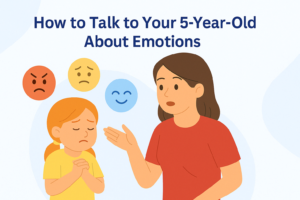
How to Talk to Your 5-Year-Old About Emotions
Helping your child name and understand their feelings is one of the best ways to reduce tantrums. At age 5, they may feel frustration, sadness, or fear — but not know how to say it. Teaching emotional vocabulary builds emotional regulation skills.
Simple Ways to Teach Feelings
Use words like “angry,” “frustrated,” “nervous,” and “disappointed” in everyday conversation.
Say how you feel sometimes too — it teaches that emotions are normal.
Point out feelings in books or shows: “How do you think she feels right now?”
Tools That Help
Emotion flashcards or storybooks about feelings
A feelings chart on the fridge
Drawing or coloring as a way to “talk without words”
When kids have the right words, tantrums often become fewer — because they finally feel understood.
When figuring out how to handle 5-year-old tantrums, teaching your child to name and share emotions is key to progress. A child who feels heard often reacts with less intensity.
When Should You See a Professional?
Most 5-year-old tantrums are part of growing up. But if your child’s outbursts are extreme, frequent, or interfering with daily life, it may be time to talk to a professional. Signs to watch for include tantrums lasting over 20 minutes, harming others, or happening several times a day. If your child seems unusually anxious, angry, or disconnected, trust your instincts.
A Pediatrician or Child Therapist Can:
Help rule out conditions like ADHD or sensory issues
Offer support plans or emotional regulation techniques
Reassure you that you’re not alone — and not doing anything wrong
Real-Life Tips from Other Parents
Sometimes the best parenting advice comes from those who’ve lived through it. Here are real tips shared by parents who’ve dealt with tantrums in 5-year-olds — and what actually worked for them.
🗣️ What Other Parents Say:
“I started giving my daughter a 5-minute warning before transitions — it really cut down on the resistance.”
“We created a ‘calm-down corner’ with soft toys and a small feelings chart. It’s her safe space now.”
“I used to take tantrums personally. Now I remind myself that it’s her way of saying she needs help.”
“I keep snacks in the car and backpack — hunger was a big trigger we didn’t notice at first.”
Real stories remind us that tantrums don’t mean failure. They mean your child is still learning — and you’re doing your best to guide them through it. Many parents have found success simply by learning how to handle 5-year-old tantrums with calm, consistent responses.
FAQs About Tantrums in 5-Year-Olds
Is it normal for a 5-year-old to still have tantrums?
Yes, occasional tantrums in 5 year olds are still developmentally normal. While many kids start calming down by age 4, emotional regulation is a skill that takes time to build.
How do I calm my 5-year-old during a tantrum?
Stay calm yourself, speak gently, and give your child space to express their feelings. Offer comfort and name their emotions: “You’re upset because we had to leave the park — that’s okay.”
What causes tantrums in 5-year-olds?
Common triggers include tiredness, hunger, sudden changes, feeling misunderstood, or not getting their way. Overstimulation or major life transitions can also spark emotional outbursts.
When should I be concerned about my child’s tantrums?
If tantrums happen daily, last over 20 minutes, involve aggression or self-harm, or affect school and social life, it’s time to consult a pediatrician or child psychologist.
How can I teach my child emotional skills and how to handle 5-year-old tantrums?
Use books, emotion charts, and simple phrases to build emotional vocabulary. Praise your child when they stay calm and guide them with problem-solving after an outburst.
Are tantrums a sign of ADHD or another condition?
Not always. But frequent or extreme tantrums may signal something more, like ADHD, sensory processing issues, or anxiety. A professional can help assess behavior patterns.
“Learning how to handle 5-year-old tantrums isn’t just about fixing behavior — it’s about building your child’s emotional foundation for years to come.”
Conclusion: Guiding Your 5-Year-Old Through Big Feelings
Tantrums in 5-year-olds can feel overwhelming — for both you and your child. But they’re often a sign of emotional growth, not bad behavior. With patience, consistency, and by understanding how to handle 5-year-old tantrums, you can help your child grow through big feelings, not against them. From setting routines to teaching emotional vocabulary and knowing when to seek support, every step you take makes a difference. Remember, you’re not alone — and you’re doing better than you think. One calm moment at a time, you’re helping your child grow.
Read: Positive parenting techniques
Why Family Is Important: 11 Powerful Reasons That Shape Your Life
Child development milestones